

Beating the Heat: Designing Apartments for Kerala’s Changing Summers
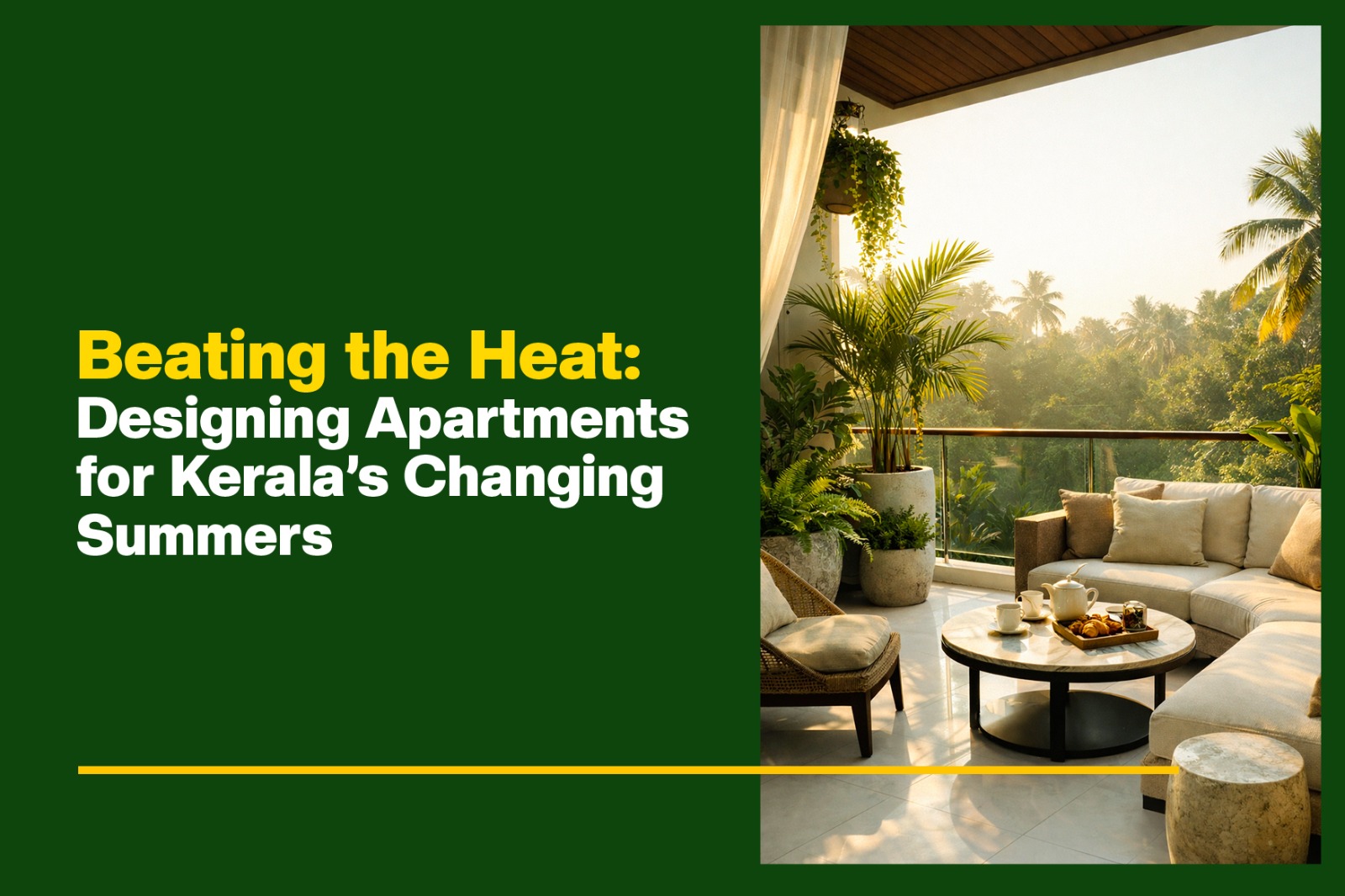
Kochi’s summers are becoming increasingly intense, making indoor comfort a growing concern for apartment living. Traditional designs often struggle to manage rising heat, leading to higher energy use and discomfort. This has made climate-responsive apartments more important than ever. By focusing on cross ventilation, smart orientation, and heat-resistant materials, modern homes can stay cooler naturally. Thoughtful design not only improves everyday comfort but also reduces energy consumption, making sustainable apartment living a practical necessity in Kerala’s changing climate.
Understanding Kerala’s Changing Summers
Climate patterns become less predictable with increasing summer heat in Kochi and high humidity levels adding to discomfort in intense heat periods. Cities experience higher temperatures with dense construction trapping heat, reduced green cover in urban areas, and heat retention by concrete surfaces. Homes retain heat for a longer duration, so poor ventilation and reduced indoor air quality increase discomfort. This leads to greater reliance on air conditioning, which results in higher electricity consumption and rising energy costs for households.
Cross Ventilation: The First Line of Defense
Continuous movement of fresh air through the home helps to remove trapped heat and reduces indoor temperature naturally, which improves overall comfort. Design determines ventilation efficiency; hence, windows on opposite walls for a cross breeze and proper alignment with the prevailing wind direction help with uninterrupted airflow in households. Natural ventilation results in energy-efficient living, reduced electricity consumption, lower AC usage, and enables a more sustainable daily lifestyle. Cross ventilation in homes allocates better indoor air quality, fresher and more breathable living spaces, and reduced humidity and stuffiness, which gradually improve the daily living experience.
Smart Building Orientation
Orientation controls heat before it enters by minimizing direct sunlight on walls, building alignment based on the sun path, and planning for cooler indoor conditions, which reduces overall heat gain. West-facing walls receive intense afternoon heat, so use of design strategies like placement of less-used spaces on hotter sides reduces sun exposure and lowers indoor temperature buildup. Light and heat must be balanced; hence, maximizing daylight without excess heat, using shaded openings and layouts, and bright interiors with controlled temperature reduce the reliance on artificial lighting. Good planning and sustainable apartment design create naturally cooler homes; hence, early design decisions impact long-term comfort, and smart orientation improves energy efficiency.
Shaded Balconies and External Protection
Balconies act as a barrier between sun and interiors, create a transition zone for cooling, reduce direct heat entering rooms, and improve indoor temperature control. External elements such as extended slabs and shading devices like sunshades and overhangs block harsh sunlight from windows, reduce heat penetration, and enhance façade functionality. Exterior design elements that limit heat absorption and balanced exterior aesthetics and function also reduce surface temperature. External protection enhances everyday comfort; cooler interiors during peak heat hours reduce the need for artificial cooling.
Energy-Efficient Windows and Materials
Windows with double-glazed and insulated glass or reflective coatings reduce heat entry and limit solar radiation indoors and also maintain cooler interiors. Material choice directly affects heat control; materials that reflect sunlight reduce heat absorption by walls and surfaces, improve thermal performance, and play a vital role in consistent indoor temperatures. Lightweight, hollow clay blocks like Porotherm bricks provide better insulation compared to conventional bricks, which reduces heat transfer into interiors and ensures energy-efficient flats in Kerala. Efficient materials lower indoor temperatures naturally, reducing dependence on air conditioning and saving energy over time, hence, improving living comfort.
Green Landscapes and Natural Cooling
Trees and plants absorb heat and lower surrounding surface temperatures. Nature naturally reduces overall environmental heat and creates cooler microclimates. Tree-lined pathways and seating areas provide protection from direct sunlight and comfortable outdoor usage for residents even in the summer. Open green zones within residential layouts provide visually calming environments, better air circulation around buildings, and a cooling effect across the community. Greener, fresher, and cooler surroundings ensure better comfort and well-being for residents.
Lower Energy Use and Cost Benefits
Natural cooling reduces the need for AC, less energy-intensive living, and sustainable daily usage. Comfortable indoor temperatures with minimal artificial cooling result in efficient use of natural resources, decreased power usage during peak summer, and efficient use of natural resources. Smart designs reduce monthly electricity bills, lower maintenance of cooling systems, and help in financial savings over time for homeowners. Eco-friendly lifestyle choices balance between comfort and sustainability.
Climate-Responsive Design as the Future
Rising temperatures and shifts toward climate-responsive apartments increase demand for cooler homes. Buyers prioritize energy efficiency and long-term comfort, which elevates the demand for eco-friendly apartments in Kochi. Smart designs, solutions like the use of ventilation, materials, and orientation, combine design with sustainability and provide practical solutions for heat reduction. Developers value responsible development, adopting climate-conscious practices and sustainable homes.
Future homes will focus on sustainability and efficiency. Climate-responsive design is essential for comfort in Kerala’s rising heat. Veegaland’s sustainable homes provide better-designed homes and support long-term environmental balance.
Recent Blog
The Future of Living in Trivandrum: Growth, Connectivity, and Nature
Some cities carry their identity quietly, without needing to announce it. Thiruvananthapuram is one of them. Modern living in Trivandrum has never come at the cost of what makes the city itself. The cultural depth i... Read More

Kozhikode: A Legacy of Culture, Trade, and Tradition
Some cities make an impression the moment you arrive. Kozhikode is one of them. There is something immediately familiar about it - the salt in the air, the easy rhythm of the streets, and the warmth in the way peopl... Read More
Thrissur: Where Heritage Breathes and Modern Living Finds Its Rhythm
Some cities are known for their growth, others for their pace. Thrissur is known for how it makes you feel, evoking a deep sense of connection to its rich cultural heritage and vibrant community life. It is not some... Read More

Sustainable Living in Kochi: Why Apartments Designed for Earth Matters
As environmental concerns grow and urban temperatures rise, sustainable living is becoming a necessity in cities like Kochi. This World Earth Day, the focus is shifting towards eco-friendly apartments that reduce ... Read More